

5,000+ private and public sector clients rely on our payment processing solutions






Why UK organisations choose Access PaySuite
Access PaySuite provides secure, automated payment processing for UK businesses, charities, and public-sector organisations. Our platform helps you streamline Direct Debit collections, improve cashflow, and reduce manual admin, all while staying fully compliant and integrated with your existing systems.
Automated payment collections
Reduce manual work and get paid on time with fully automated payments. Access PaySuite streamlines recurring payments and reconciliation to cut admin and errors.
Faster, more predictable cashflow
Improve financial stability with reliable payment schedules, fewer failed transactions, and real-time visibility across all your incoming payments.
Secure, compliant payment processing
Stay aligned with UK payment regulations including Bacs and PSD2. Access PaySuite provides built-in security, audit-ready reporting, and compliant workflows for every transaction.
Seamless integrations with your existing systems
Connect Access PaySuite to your CRM, finance software, or sector-specific platforms. Automate data flow, reduce duplication, and give your team a unified payment management experience.
All your payment solutions in one place


Payment processing at scale
m+
transactions / year
+
customers
+
years experience
What are the key benefits of payment processing services?
Take your payment processes to the next level and unlock new opportunities for growth
Our payment processing platforms improve cashflow
Our payment platform brings greater simplicity to businesses and organisations, reduces the need for time-consuming admin whilst giving you the confidence that you will get paid on time.
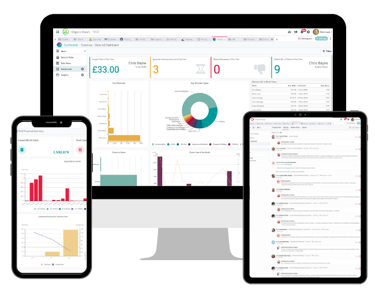
Payment processing services for all sized businesses
Whether you're a business, not for profit or membership organisation, we can cut hours of chasing payments so you can get paid quicker and with better accuracy.

Achieve effortless payments by integrating seamlessly with our API


There have been a lot of efficiency benefits. On the old system, Direct Debits had to be entered manually, but now with the PaySuite integration, it is automatically entered.
Unlock your revenue potential and safeguard your payments
With our revenue maximisation tools and solutions, you can optimise your income management, enhance payment security, mitigate fraud and risk, and ensure robust identification and verification. Our goal is to empower your business to maximize revenue and thrive in the payments industry.

Income Management
Our software helps you maximise revenue and improve cash flow with fast, efficient payment processing. Reduce delays and enhance your overall financial performance.

Fraud and Risk Management
Our fraud and risk tools help you detect threats, prevent fraudulent activity, and protect your business from financial losses with powerful, automated monitoring.

Identification and Verification Solutions
Our ID and verification solutions confirm customer identities, ensure regulatory compliance, and streamline onboarding while reducing risk and building trust.
Frequently asked questions
What is a payments service provider?
At Access PaySuite, we know the payments industry can be full of technical terminology and acronyms, so one of our aims is to help customers decode some of that jargon.
A payment service provider is a third-party company that allows merchants to accept credit and debit card payments, Direct Debit payments, bank transfers, and more.
Payments service providers (PSP) or merchant services providers, connect payments between businesses and customers, ensuring transactions are made safely and securely from start to finish.
They also provide merchant accounts, which is an account that receives the processed payments from debit and credit card purchases, and a payment gateway, which enables businesses to take payments online.
How do payment service providers work?
They work with payment processors or acquiring banks, to ensure money is transferred from your customer’s account to your own, safely and securely.
Probably the easiest way to explain the process is to demonstrate how a transaction works and where a payment service provider comes in.
- A customer makes a purchase using their card, a transaction request is sent to the payment gateway.
- This information is verified by the payment service provider and checks there are enough funds in the account to make the payment.
- Once this is all confirmed, the PSP transfers funds from the customer’s bank to the merchant account you have associated with your business.
- The payment service provider then notifies you and the customer that the payment has been completed.
- If a transaction is declined, due to invalid card details, the PSP will stop the transaction and a notification will be sent to both you and your customer.
What is a payment processor?
Businesses use payment processors to accept card payments. They usually sit between the bank and the merchant and look after the transfer of card information from the payment networks, for example, Visa and Mastercard, to your bank and the customer’s bank.
In essence, you need a payment processor if you want to accept debit or credit card payments. Payment processors charge different fees, so it’s important you choose a company that works for your business.
For more information, discover what a payment processor is and how to choose one in our useful guide.
How does payment processing work?
There are several different factors or systems involved in online payment processing. Our simple explanation will help illustrate how it works;
- Once a customer has made a purchase via credit or debit card, this information is transferred to the payment gateway.
- The payment gateways transfer the information to the payment processor.
- The payment processor transfers the details to the card payment network and confirms the credit card details.
- If the verification is successful, the card network communicates with the customer’s issuing bank to release the funds. Once checks are made to ensure there are enough funds and the transaction isn’t fraudulent, the issuing bank will confirm to the card network that the transaction is approved.
- This information is received by the payment processor, who then requests the transfer of funds from the customer’s bank to the merchant account.
What are b2b payment systems?
B2b payments are payments made between businesses, such as invoices. Whilst the pandemic has accelerated the digitization of payments within the business-to-consumer (b2c), b2b payment systems are still filled with inefficiencies, manual reconciliations, or legacy systems with limited capabilities.
Currently, in the UK, over half of all b2b payments are still made by bank transfer which is not always suitable for a lower value, frequent payments-especially if you’re looking to scale your business quickly.
If you want to talk through what payment solution would suit your business, get in touch today.
What is a Bacs payment?
A Bacs payment is direct payments are made between banks specifically in the UK. Bacs is owned and operated by Pay.UK and is the cheapest way to make business payments. It’s easy to set up, and because it’s supported by all payroll software, it is the most common business payment method for paying employees.
There are two main Bacs payments, Direct Debit and Direct Credit. Direct Debit is where money is taken from your bank account, such as council tax, utility bills, mobile phone bills etc.
Bacs Direct Credit is the opposite and where funds are deposited into your bank account. Examples could be salary payments, pensions, refunds and more.
How long does it take Bacs payments to clear?
Bacs payments aren’t instant, it takes 3 business days for a Bacs payment to clear, but they’re still the main bank payment method used by businesses.
The process starts from when a payment is initiated, so when the payment file is submitted to the Bacs system, provided it’s before a specific time. The payment is processed by the bank on the second day and on the third day, the recipient will receive it in their account.
Because Bacs payments are only processed on business days, it might take longer than 3 days to clear if there’s a bank holiday, or if you submit the payment on a Friday, or outside regular hours.